Using AMAYA
How to use Ask the Sky in AMAYA
Open Practice, then Ask the Sky. Describe one situation, the choice you face and its circumstances. Read the question, chart, explanation and relevant period together.
- One question
- Chart and explanation
- Your decision
Begin with a question about a real situation. You might want to understand how to approach a conversation. Describe what is happening and what you want to clarify.
Ask one question
Name the matter
Which conversation, offer or choice do you mean? Include enough context to make the subject clear.
Name your choice
What depends on you: accepting an offer, clarifying its terms or choosing a next step? Separate unrelated questions.
Add the circumstances
Include important timing and constraints. Read the question again before sending it.
How to make a vague question specific
Take a first draft of your question and use the examples below to refine it. The subject is the particular matter you want to ask about: a joint project, a move or an upcoming conversation. The context is what surrounds it: what has happened, which options are available and when you need to decide.
Include a detail when it changes the question. For a joint project, that might be your role; for a move, the available accommodation and length of your stay. If something is still unknown, say so. Keep a distinction between a fact, your own assumption and something you need to ask another person.
The situations and questions below are fictional teaching examples, written for this guide. Each pair shows which details have been added to a first draft. Use them as a starting point, then describe your own circumstances in your own words.
An invitation to join a project
Teaching example: helping to prepare a workshop.
- First draft
- Should I say yes?
- With more context
- I have been invited to help with a workshop next Saturday. I have two free evenings to prepare, but my role has not been agreed. Should I commit to taking part now?
The question now identifies the commitment and what still needs discussion. It includes a deadline, the available time and an unknown condition. Ask the organiser about the work involved and your responsibilities. Keep the decision to take part separate from questions about publicity or future projects together.
A move for a limited time
Teaching example: deciding whether to stay in another city.
- First draft
- Should I move?
- With more context
- I have an opportunity to live in another city for a month and continue working remotely. Accommodation is available from Monday, but the return date still needs to be agreed. What should I consider when deciding whether to begin this move next week?
The first version leaves the kind of move unclear. The second names the length of stay, the work arrangement and the immediate decision. Its timing belongs to this fictional situation. Use actual dates for your own question, and leave any unresolved arrangements clearly open.
A conversation after a postponed meeting
Teaching example: discussing a meeting with a colleague.
- First draft
- Why are they treating me like this?
- With more context
- A colleague has postponed our meeting about a shared project twice. We have not agreed on a new date. How can I approach a conversation about when to meet and whether they want to take part?
This version names an observable event and the subject of the conversation. The reason for the postponements remains unknown. If you have an assumption about it, label it as an assumption. The question focuses on your part in the conversation; your colleague can explain their own intentions.
Refine your own draft
Read your question without the rest of the conversation. Is the subject clear? Can you tell what is known and what needs deciding? If it contains several separate decisions, choose the one that needs your attention now. Write the other questions down separately.
Remove details unrelated to this decision. Keep the important conditions and your question. As you read the response, keep that wording in view: the next section explains how to read the original question, the chart and explanation together.
Read the full explanation
First check that the text addresses your original question. Look at the chart and its explanation, then find the period to which the reading applies.
If something is unclear, ask about that detail by name. Keep the original question in view while reading so the explanation remains connected to it.
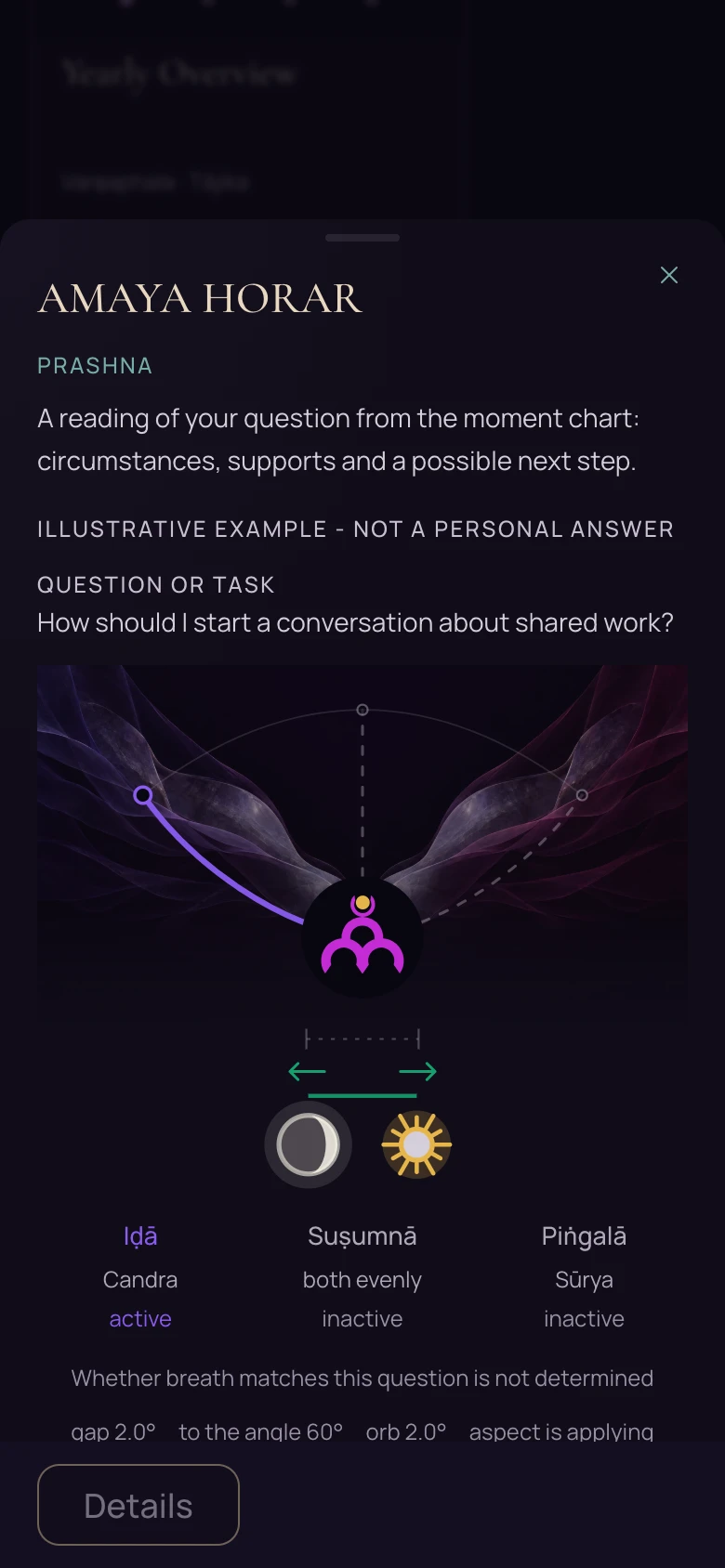 Open full size - in a new tab
Compare it with your circumstances
The reading cannot make your decision or guarantee an outcome. Check the facts, timing and possible consequences. You choose the action.
The teaching example shows how a question, an explanation and a next step fit together. Its details do not describe your situation.