Attention and everyday practice
When you feel anxious: bring your attention back to the present
Pause if the situation allows it. Notice the feeling, feel the surface supporting you and name what you can see around you. Then choose one small next step.
- Notice the feeling
- Return to your surroundings
- Choose an action
Before a conversation, your thoughts may jump to the worst outcome. It can help to notice what is happening within you and around you before returning to the decision. This exercise needs neither a special state nor a fixed number of seconds.
First check whether you can pause
If you are in danger, attend to safety first. This sequence is for an ordinary tense moment when you can briefly step back from a task. Do not practise it while driving or instead of taking necessary action.
Name the situation briefly: “I feel anxious before this conversation.” You do not have to analyse every cause or convince yourself that everything will turn out well.
Bring your attention to your surroundings
Support
Notice your feet on the floor or your back against the chair. Get comfortable without straining.
A nearby detail
Look at a familiar object and notice its colour and shape. Listen for one sound around you.
Comfortable breathing
Breathe comfortably. You do not need to hold your breath, force it deeper or follow a count.
Example: before a difficult conversation
Suppose you need to discuss moving a deadline in a few minutes. You are already thinking, “They are going to blame me.” Separate what you know from what you expect. This is not about convincing yourself of a good outcome: you do not yet know how the other person will respond.
| What to notice | What it might sound like |
|---|---|
| An expectation | “I think the other person will be unhappy.” |
| A known fact | “We agreed to discuss the deadline; the task is not finished.” |
| A next action | “I will say what is ready and ask which deadline matters most now.” |
If concentrating is difficult
You do not have to complete the whole list perfectly. Keep just one available point of attention: feel the chair or look at an object. If paying attention to breathing adds tension, skip that step.
If you cannot continue a conversation, you can ask for a pause: “I need a little time to collect my thoughts. Can we come back to this later?” Whether a pause is possible, and how long it can be, depends on the situation.
A lack of immediate relief does not mean you tried incorrectly. This sequence does not require a particular result within a fixed number of seconds. You do not need to measure your pulse to score the exercise.
After the event, record one useful fact
You can open Journal later, when you want to record an observation. You do not need to turn the most tense moment into an assignment in the app.
Example entry: “Before the conversation, I expected blame. I asked about the task priority first. We agreed to revisit the deadline after checking the scope.” This records an event, an expectation and an action; it does not grade you as right or wrong.
Keep one specific reminder for next time: “Start by asking about the priority.” If the tension remained, you can honestly add that. The entry does not have to end with good news.
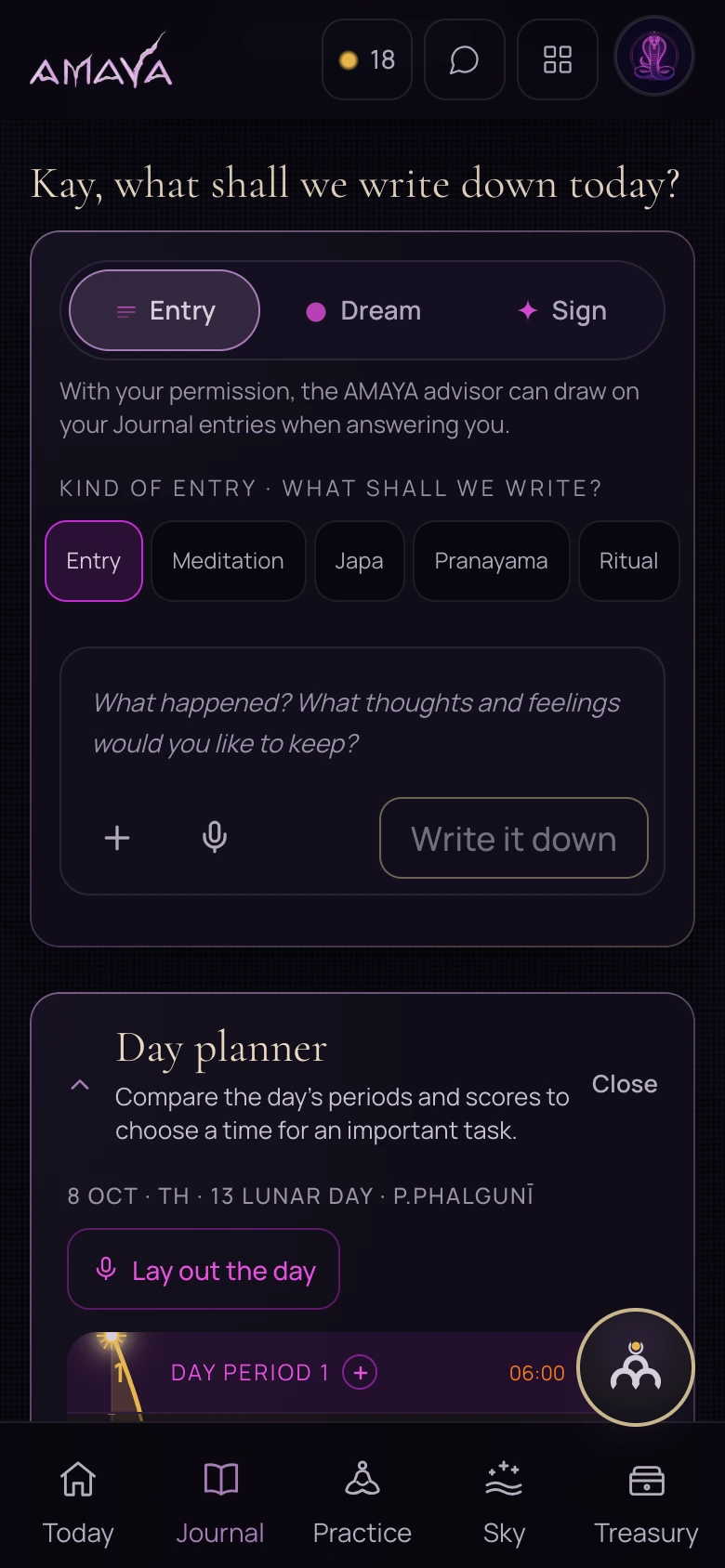 Open full size - in a new tab
The limits of a brief exercise
If anxiety keeps returning, gets worse or interferes with everyday life, seek professional support. A short pause does not replace treatment or individual advice.
A racing heart, pain or difficulty breathing does not establish that you are experiencing panic. Similar symptoms can have other causes and need medical assessment. NHS guidance specifically notes this limitation.
The sources include an illustrated WHO guide to skills for managing stress. You can explore it at a calmer time. The conversation and Journal examples in this article were written for AMAYA; they are not a clinical protocol.
Try it in AMAYA
You can keep an observation in Journal after the event. You do not have to write during the most difficult moment.
AMAYA Journal: keep a thought, dream or observation
Open Journal