Attention and everyday practice
Preparing for sleep: a calmer evening and a regular morning
Preparing for sleep begins with closing the day: set active tasks aside, note what you will return to tomorrow and leave time for a quiet activity. Getting up at your usual time supports a regular routine.
- Close the day's tasks
- Make time to rest
- Return to your morning routine
Sometimes your body is tired while conversations and tasks keep running through your mind. Falling asleep does not need to become another test. Start with conditions you can influence: the transition from work to rest and a simple plan for the morning.
Separate your evening from unfinished tasks
If unfinished work comes to mind before bed, note what you will return to later. Your evening note does not have to become a detailed plan, and you do not have to complete every task to earn rest.
Use two columns: what remains, and where I will start. The second needs a recognisable action, not a general promise to “fix everything tomorrow”.
| What remains | A first next step |
|---|---|
| An unclear work deadline | Ask a colleague in the morning what is needed for the meeting. |
| An unfinished household matter | Check what information is needed to make a decision. |
| A difficult conversation | Write down one question you would like to start with. |
Make room for the day to end
Choose a brief transition from work to rest that fits your circumstances. For example: save your work, note the next step and put work materials away. This sequence has no required duration and does not demand a particular feeling.
Basic NHS guidance includes going to bed when sleepy, keeping a regular waking time, allowing time for a quiet activity beforehand and checking for disruptive light, noise or discomfort. These are useful starting points, not a guarantee of falling asleep.
If you share a room or need to remain available, begin with what you can actually control. You might agree on when work messages can wait or keep paper nearby for a brief note. Not everything depends on personal discipline.
When the same thought returns
Recognise the familiar question
“I am thinking about tomorrow’s meeting again.” You do not have to find the final answer now.
Check the note
If the next step is already written down, leave it until the time you chose. You do not need to rewrite the whole list.
Make the task smaller
If one note becomes a large plan, keep only what matters not to forget. You can work through the rest separately.
Begin with the day you actually have
Look at the evening note and choose what is still relevant. Sometimes the question has changed; you do not have to carry everything into the new day automatically.
Example: the evening note says “prepare the whole presentation”, but in the morning you find that you need a colleague’s data first. The next step is to request it. An evening note helps you return to a task; it does not oblige you to follow yesterday’s plan without adjustments.
If the morning did not go as you hoped, you do not need to declare the whole routine a failure. Choose one next transition you could make easier.
What to record in AMAYA Journal
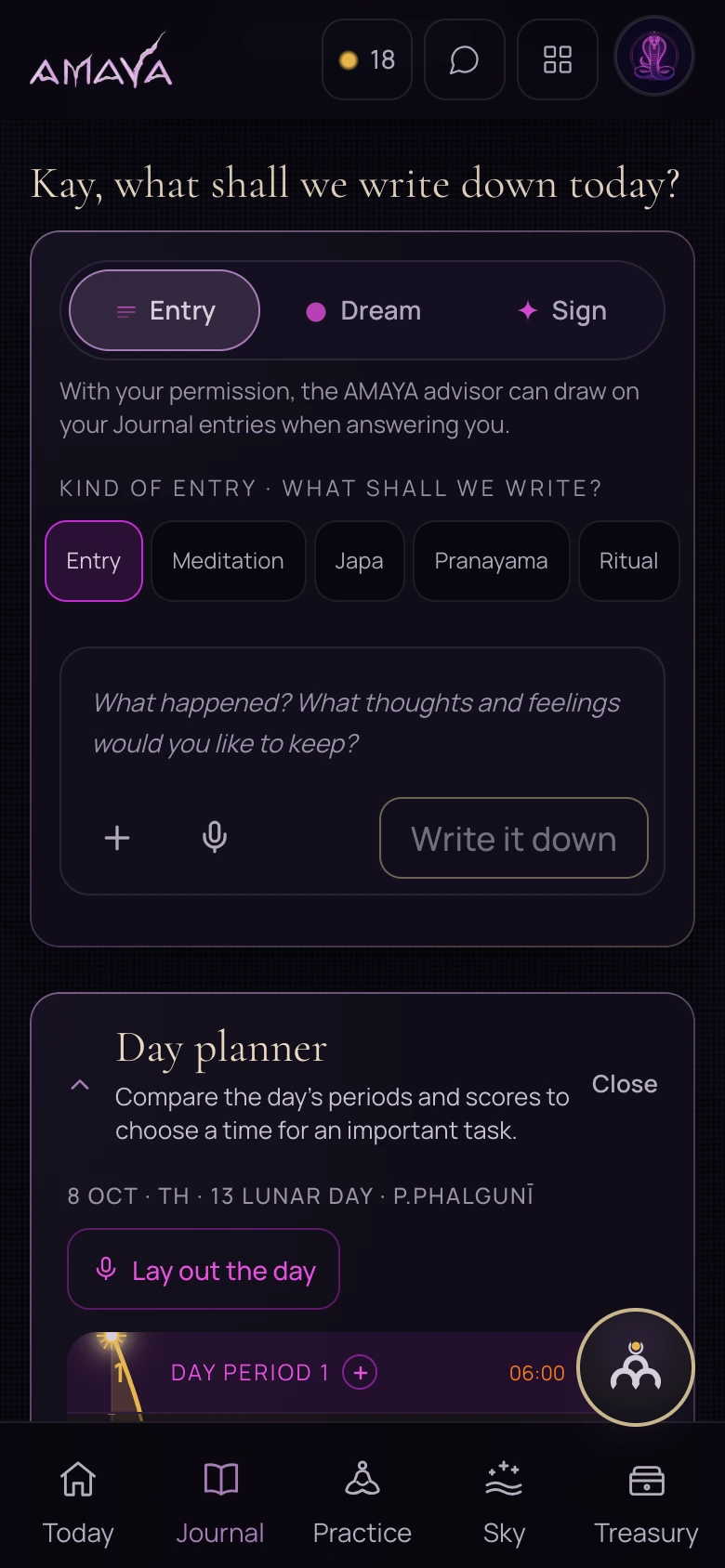
If you prefer a digital journal, you can make a brief evening note ahead of time. You do not have to open the app once you are in bed. After waking, you can add an ordinary text note about how the night went.
Example: “I finished work late and kept returning to one conversation. In the morning, I decided to clarify the question before replying.” This records circumstances and an action; it cannot identify a medical cause of sleep difficulties.
For later comparison, keep recognisable details: what you did before resting, what interfered and what you decided to try differently. One night does not establish a universal solution. A score and an unbroken daily series are not required.
 Open full size - in a new tab
When a routine is not enough
If sleep problems persist, affect ordinary life or do not improve after changes to your habits, contact a doctor. The app does not establish the cause of sleep difficulties or prescribe treatment.
Keep the parts that fit your evening and morning. You can start with one note and one manageable transition from tasks to rest, then adapt the routine to your circumstances.
Try it in AMAYA
An ordinary Journal entry can hold an evening note or an observation after waking.
AMAYA Journal: keep a thought, dream or observation
Open Journal